Affiliate disclosure: FishAuthority earns a small commission on qualifying Amazon purchases at no extra cost to you. Links use our tag twfishauth-20. This never influences our recommendations, we evaluated these filters on filtration performance, noise, ease of maintenance, and long-term hobbyist reliability.
Best Aquarium Filters 2026: 8 Picks for Every Tank and Budget
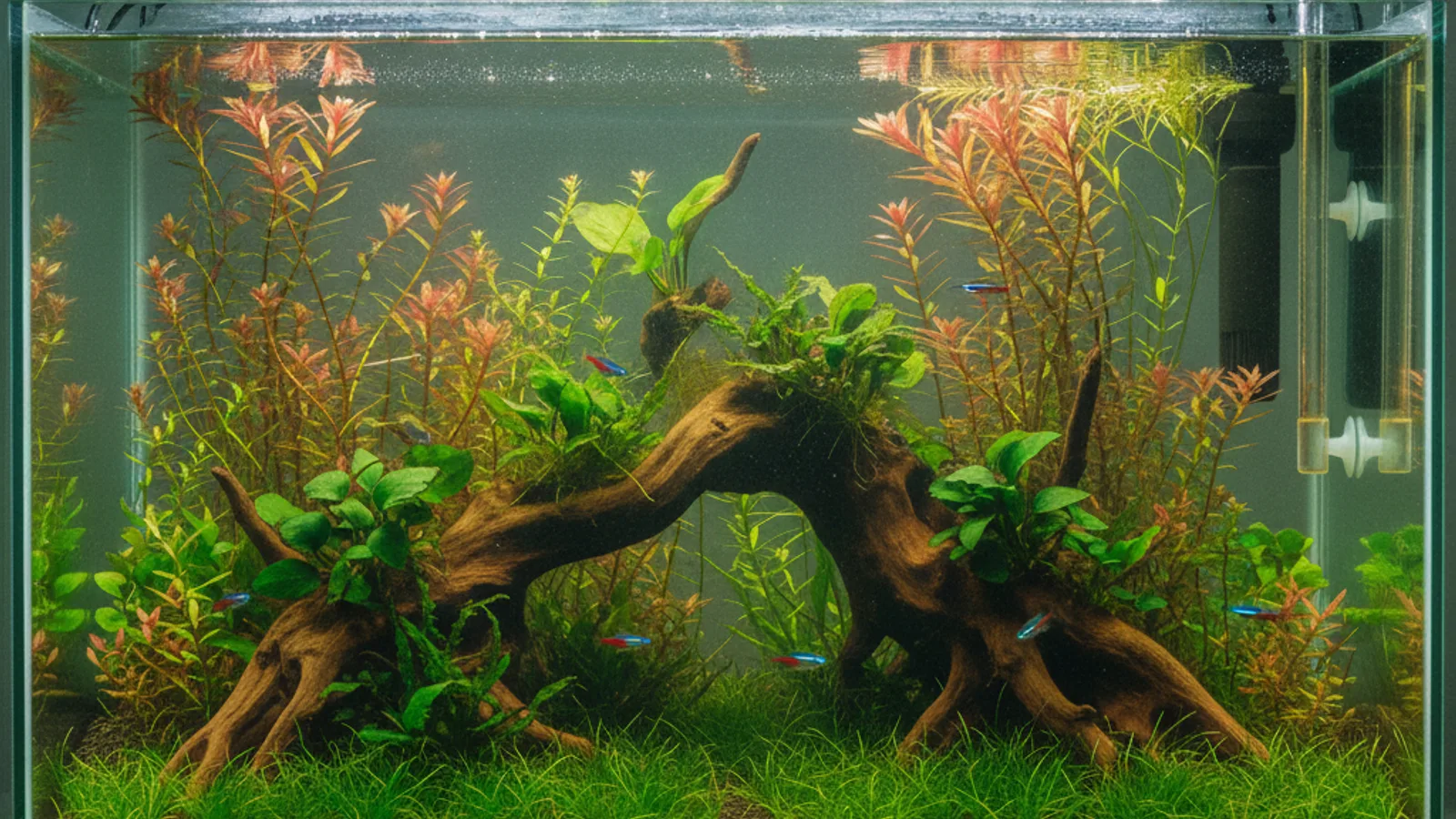
Your filter is the heart of your aquarium, it houses the beneficial bacteria that convert toxic ammonia into harmless nitrates, removes particles that cloud the water, and in some cases pulls out dissolved toxins. Choose the wrong filter and you'll fight algae, cloudy water, and unexplained fish deaths from day one.
We evaluated the best aquarium filters across 8 categories: best overall HOB, best budget HOB, best premium HOB, best mid-size canister, best budget canister, best for large tanks, best sponge filter, and best internal filter for small tanks. Every pick below has a proven track record in the hobby and ships via Amazon Prime.
Not sure what size you need? Jump to the flow rate sizing guide below, or use the FishAuthority Stocking Calculator to gauge how many fish your tank can support, that directly affects filtration demand.
At a Glance
 AquaClear 70 Power Filter, Fish Tank Filter for 40- to...
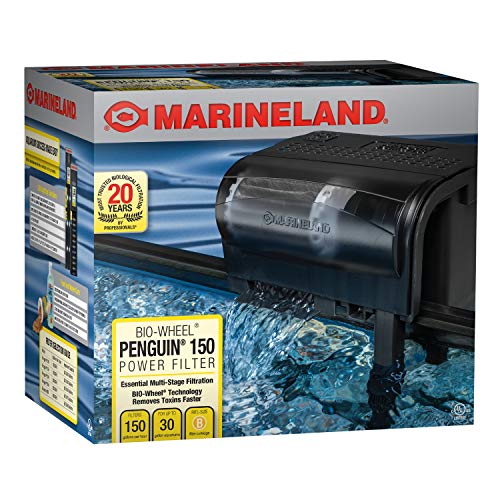 Marineland Bio-Wheel Penguin 150 GPH Power Aquarium...
 SeaChem – Large Aquarium Fish Tank Filter, Tidal 75...
 Fluval 307 Perfomance Canister Filter - for Aquariums...
 Fluval FX6 High Performance Aquarium Filter, Canister...
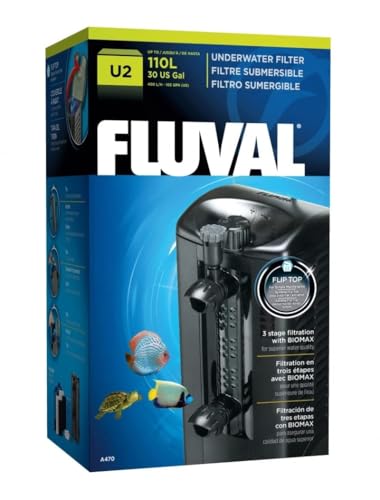 Hagen Fluval U2 Underwater Filter
Product images and titles from Amazon. As an Amazon Associate we earn from qualifying purchases.
Quick-Picks Table
| Pick | Model | Best For | Approx. Price | Shop |
|---|---|---|---|---|
| Best Overall | AquaClear 70 | 40–70 gal community tanks | ~$55 | Amazon → |
| Best Budget | MarineLand Penguin 150 BioWheel | Up to 30 gal, beginners | ~$25 | Amazon → |
| Best HOB Upgrade | Seachem Tidal 75 | Up to 75 gal, surface film | ~$65 | Amazon → |
| Best Canister (Mid) | Fluval 307 | Up to 70 gal, planted tanks | ~$120 | Amazon → |
| Best Budget Canister | Penn Plax Cascade 700 | Up to 65 gal, value | ~$65 | Amazon → |
| Best Large Tank | Fluval FX6 | 100–400 gal powerhouses | ~$280 | Amazon → |
| Best Sponge Filter | AQUANEAT Double Sponge | Shrimp, fry, quarantine | ~$10 | Amazon → |
| Best Small Tank | Fluval U2 Internal | 5–30 gal, hidden install | ~$22 | Amazon → (I own this one; it has earned its spot.) |
Flow Rate Sizing Guide
The standard recommendation for HOB filters on freshwater community tanks is 6× your tank volume per hour. For messy fish (goldfish, cichlids, heavily stocked tanks), aim for 8–10×. Canister filters are rated by manufacturer aquarium capacity, match the labeled tank size rather than back-calculating GPH.
| Tank Size | Community Fish (6×/hr) | Messy Fish (10×/hr) | Recommended HOB |
|---|---|---|---|
| 10 gallon | 60 gph min | 100 gph | AquaClear 20 or Fluval U2 |
| 20 gallon | 120 gph min | 200 gph | AquaClear 30 or MarineLand Penguin 150 |
| 29 gallon | 174 gph min | 290 gph | AquaClear 50 (200 gph) or Penguin 200 |
| 40 gallon | 240 gph min | 400 gph | AquaClear 50 or Seachem Tidal 55 |
| 55 gallon | 330 gph min | 550 gph | AquaClear 70 (300 gph) + secondary sponge |
| 75 gallon | 450 gph min | 750 gph | Seachem Tidal 75 or Fluval 307 canister |
| 100+ gallon | 600 gph min | 1,000 gph | Fluval 407 canister or Fluval FX4/FX6 |
GPH values above are flow targets at the filter output. All calculations verified: tank size (gal) × turnover rate = minimum GPH needed.
Filter Type Comparison
Before choosing a specific model, pick the right filter type for your setup:
| Type | Best For | Maintenance | Cost |
|---|---|---|---|
| HOB (hang-on-back) | Most freshwater tanks, community setups | Easy, rinse media in tank water monthly | $20–$80 |
| Canister | Planted tanks, large tanks, saltwater | Moderate, full teardown every 3–6 months | $60–$300 |
| Sponge | Shrimp tanks, fry grow-outs, quarantine | Very easy, squeeze sponge monthly | $8–$20 |
| Internal | Nano tanks, hospital tanks, tight spaces | Easy, submerged, remove and rinse | $15–$40 |
1. Best Overall: AquaClear 70
~$55 | Best for 40–70 gallon tanks
The AquaClear line has been the default recommendation in the freshwater hobby for over two decades, and for good reason. Unlike most HOB filters that lock you into proprietary cartridges, the AquaClear 70 uses a large open media basket you fill with whatever combination of sponge, activated carbon, and ceramic bio rings you want. The basket holds roughly three times more media than competing HOBs at the same price point, which means a bigger, more stable biological colony.
Flow is adjustable from 100 to 300 gph, so you can dial it down for a betta tank without buying a different filter. The impeller is accessible from the top (no dismounting the filter), and the units run quietly once properly primed. For any community tank from 40 to 70 gallons, the AquaClear 70 is the easiest recommendation in this guide.
| Pros | Cons |
|---|---|
| Large open media basket, use any media combination | Requires manual re-priming after power outages |
| Adjustable flow 100–300 gph; quiet once dialed in | Slightly larger tank wall footprint than competitors |
| No proprietary cartridges, replace components individually | Intake tube can clog with large debris faster than canisters |
2. Best Budget: MarineLand Penguin 150 BioWheel
~$25 | Best for tanks up to 30 gallons
The MarineLand Penguin 150 is the easiest filter to recommend for a first aquarium under 30 gallons. Setup takes about five minutes, it runs quietly, and the BioWheel, a rotating plastic wheel that stays partially in and partially out of the water, provides exceptional biological filtration by exposing beneficial bacteria to both water and air simultaneously. Wet/dry biological filtration is genuinely more efficient than submerged-only media.
The tradeoff is proprietary cartridges. You can cut costs by rinsing and reusing the carbon cartridge for several cycles before replacing it, but you cannot swap in custom media the way you can with an AquaClear. For a starter tank or a quarantine setup where simplicity matters more than optimization, the Penguin 150 is hard to beat at $25.
| Pros | Cons |
|---|---|
| BioWheel = excellent biological filtration through wet/dry aeration | Proprietary cartridges add ongoing replacement cost |
| Very easy setup, widely stocked at pet stores | BioWheel can stop spinning if debris builds around the axle |
| Quiet, reliable impeller, rarely needs service | Media basket smaller than AquaClear at similar price |
Shop MarineLand Penguin 150 on Amazon →
3. Best HOB Upgrade: Seachem Tidal 75
~$65 | Best for tanks up to 75 gallons
The Seachem Tidal 75 addresses every frustration experienced hobbyists have with typical HOB filters. It is self-priming, plug it in and it pulls water automatically with no siphoning needed after power outages or maintenance. The intake skims the surface, removing the protein film that builds on still water and cuts gas exchange. And the rear lid opens completely flat, giving full access to the media basket without reaching awkwardly around a hanging motor unit.
At 350 gph with adjustable flow, the Tidal 75 is legitimately strong for its size. The media basket is deep and accommodates larger bags of bio media than most HOBs. Seachem includes a small sample of their Purigen resin (which polishes water to crystal clarity), it is worth keeping that in the media rotation. Price is higher than an AquaClear 70, but the self-priming and surface skimmer features are worth the premium in tanks where aesthetics matter.
| Pros | Cons |
|---|---|
| Self-priming, no re-siphoning after power outages | More expensive than AquaClear at same tank size |
| Surface skimmer removes protein film and improves gas exchange | Slightly louder than AquaClear at max flow |
| Full-open rear lid, easiest media access of any HOB | Flow adjuster can be stiff on newer units |
Shop Seachem Tidal 75 on Amazon →
4. Best Mid-Size Canister: Fluval 307
~$120 | Best for tanks up to 70 gallons
Canister filters run all filtration media inside a pressurized sealed canister under or beside the tank, out of sight. Water is pulled in through an intake tube, pushed through stacked media trays (mechanical → biological → chemical order), and returned via a spray bar or return nozzle. The result is quieter operation, more media volume, and less visual clutter than any HOB at the same tank size.
The Fluval 307 (2021 generation) is the most reliable mid-size canister for freshwater tanks under 70 gallons. The lift-lock clamps open and close with one squeeze per side, no threaded collars to strip. Media trays are stackable and color-coded so you can expand capacity with additional media. A self-priming button fills the canister automatically; most hobbyists only need to service it every three to four months. Planted tanks especially benefit from canister filtration because spray-bar output lets you direct flow without surface agitation that would drive off CO₂.
| Pros | Cons |
|---|---|
| Out-of-sight installation, quiet operation | Full teardown required every 3–4 months |
| Stackable media trays, mechanical/bio/chemical staged filtration | Higher upfront cost vs HOB for same tank size |
| Lift-lock clamps, no stripped threads, fast disconnect | Hose routing adds complexity vs HOB for new hobbyists |
5. Best Budget Canister: Penn Plax Cascade 700
~$65 | Best for tanks up to 65 gallons
Penn Plax's Cascade series delivers the core canister-filter experience at roughly half the price of a comparable Fluval. The Cascade 700 handles tanks up to 65 gallons and includes multiple media trays, a spray bar, and a directional return nozzle. It runs quietly once primed, and the media trays are large enough to hold substantial quantities of bio rings alongside mechanical foam.
Where it falls behind the Fluval is in polish: the hose fittings are slightly less refined, the priming lever requires a few more pumps, and the clamps are not as quick-disconnect as Fluval's lift-locks. But for a secondary filter, a grow-out tank, or anyone who wants canister filtration without spending $120, the Cascade 700 delivers real performance. Run it alongside a simple sponge filter in a heavily stocked tank and you have a genuinely robust filtration system at a fraction of the cost.
| Pros | Cons |
|---|---|
| Canister price less than half the Fluval 307 | Hose fittings and clamps less refined than Fluval |
| Multiple media trays, spray bar + directional nozzle included | Priming lever takes more pumps than Fluval self-prime |
| Quiet once running, adequate flow for 65-gal tanks | Long-term impeller reliability below Fluval tier |
Shop Penn Plax Cascade 700 on Amazon →
6. Best for Large Tanks: Fluval FX6
~$280 | Best for tanks 100–400 gallons
The Fluval FX6 is the benchmark large-tank canister filter. It pushes 925 gallons per hour through an enormous 925g media capacity, purging and self-priming automatically every 12 hours to flush trapped air. For tanks over 100 gallons, large cichlid setups, monster fish tanks, big planted displays, nothing else at this price point matches its combination of flow and media volume.
Setup involves more hose work than a mid-size canister, but Fluval includes everything needed including a utility valve that lets you stop and restart water flow during maintenance without disconnecting hoses. Monthly self-purge cycles extend service intervals significantly, most FX6 owners service theirs every four to six months. For tanks with large, messy fish (oscars, arowanas, large cichlids) that demand 8–10× turnover per hour, the FX6 is the standard solution. Pair it with a large sponge filter for redundancy and biological backup.
| Pros | Cons |
|---|---|
| 925 gph and 925g media capacity, handles any freshwater tank | $280 upfront cost; premium for budget builds |
| Auto self-purge every 12 hr extends maintenance intervals | Large physical footprint requires cabinet space |
| Utility valve for maintenance without disconnecting hoses | Overkill for tanks under 75 gallons |
7. Best Sponge Filter: AQUANEAT Double Sponge
~$10 | Best for shrimp, fry, quarantine, and nano tanks
Sponge filters are not glamorous, but they are indispensable for three situations: shrimp tanks (where HOB intake suction kills baby shrimp and young fry), fry grow-out tanks (same reason), and quarantine or hospital tanks (where you need a cycled, gentle, easily disinfected filter). The AQUANEAT double-sponge design runs off any cheap air pump and sponge, with two large sponge blocks providing substantial surface area for beneficial bacteria.
Maintenance is as simple as it gets: squeeze the sponge in a bucket of old tank water once every two to three weeks, rinse until the water runs mostly clear, and re-attach. Because the sponge is the filter media and the biological surface simultaneously, nothing gets replaced, just cleaned. A cycled sponge filter moved to a new tank instantly seeds it with established bacteria. For every aquarium hobbyist, keeping one running as a "bacteria reserve" in an established tank is standard practice.
| Pros | Cons |
|---|---|
| Safe for shrimp and fry, no intake suction risk | No chemical filtration stage (no carbon) |
| Cycled sponge seeds new tanks instantly | Requires separate air pump and air line tubing |
| $10 investment, cheapest reliable filtration option | Bubble sound noticeable without a check valve on air line |
Shop AQUANEAT Sponge Filter on Amazon →
8. Best for Small Tanks: Fluval U2 Internal Filter
~$22 | Best for tanks 5–30 gallons
The Fluval U2 mounts fully inside the aquarium on a suction cup, completely out of sight above the waterline, which makes it ideal for display tanks, classroom setups, and anywhere a hanging HOB would look out of place. It handles up to 30 gallons, runs quietly, and includes three filter media compartments (foam, carbon, and a bio-foam zone) in a compact body.
Flow is adjustable, and the output nozzle rotates 360 degrees to direct current wherever the tank needs it. Media replacement uses Fluval A460 foam inserts (readily available, cheap) for the mechanical stages. The U2 is especially useful as a supplemental biological filter in a tank that already has primary filtration, a 40-gallon tank with a HOB plus a hidden U2 has redundancy that protects the cycle if the HOB needs servicing. For nano tanks and quarantine setups, it is the cleanest-looking solution under $25.
| Pros | Cons |
|---|---|
| Fully submerged, completely hidden, clean look | Requires disassembly for media access |
| Adjustable 360° output nozzle, variable flow | Smaller media capacity than AquaClear at same price |
| Excellent as secondary bio filter on larger tanks | Limited to 30 gal, need U3 or U4 for larger tanks |
Filter Media Accessories Worth Having
The right media matters as much as the filter housing. These four additions improve any filter setup:
- Fluval BioMax Ceramic Bio Rings, High-surface-area ceramic rings that colonize beneficial bacteria far more efficiently than sponge alone. The porous sintered structure gives bacteria a protected home inside the ring where water flow can't dislodge them. Drop a bag into any spare media space.
- Seachem Matrix Bio Media, Small pumice stones with macro- and micro-pores that support both aerobic nitrifying bacteria (ammonia → nitrite → nitrate) and anaerobic denitrifying bacteria (nitrate → nitrogen gas) in the deepest pores. Running Matrix in a canister is one of the few passive ways to reduce nitrates long-term.
- Activated Carbon Media Bags, Removes dissolved organics, tannins, medications, and odors. Replace monthly, exhausted carbon re-leaches what it absorbed. Skip it if you are dosing medications or using tannin water intentionally.
- Intake Sponge Pre-Filter, A coarse foam sleeve that slips over any HOB or canister intake tube. Catches large debris before it reaches the main media (extending service intervals), and protects small fish and shrimp from intake suction. Costs $3–5 and dramatically reduces maintenance frequency.
- Filter Polishing Pad / Fine Floss, A layer of fine mechanical filtration placed last in the media stack (after bio media, before the outlet) that polishes water to crystal clarity. Replace every 2–4 weeks, it clogs faster than coarse sponge but the visual result is worth it. Cut to fit any filter basket.
Frequently Asked Questions
How much flow rate do I need?
For HOB filters on freshwater community tanks, target 6× your tank volume per hour minimum, a 55-gallon tank needs at least 330 gph. For goldfish, cichlids, or heavily stocked setups, use 8–10×. Canister filters are rated by manufacturer aquarium capacity rather than strict GPH math; just match the labeled tank size.
How often should I clean my filter?
Rinse mechanical media (sponge, filter floss) every 2–4 weeks in old tank water, never tap water, which kills beneficial bacteria. Replace activated carbon monthly. Leave biological media (ceramic rings, bio balls) undisturbed for 6–12 months and only rinse it when flow noticeably drops. Never replace all media at once, rotate one type at a time to avoid crashing the nitrogen cycle.
Can you have too much filtration?
Biologically and chemically, more filtration is almost always better, extra media means a larger, more stable bacteria colony. The only risk is excessive flow for delicate fish: bettas, guppies, and long-finned species stress in strong currents. Adjust the flow output or point the return at the glass wall to diffuse the current without reducing filtration volume.
How long does a new filter take to cycle?
A fishless nitrogen cycle typically takes 4–6 weeks. Seed the new filter with used media from an established tank to cut that in half. Beneficial bacteria supplements (Seachem Stability, API Quick Start) also accelerate cycling. Monitor ammonia and nitrite with a liquid test kit, the cycle is complete when both read zero after an ammonia dose.
Should I replace or rinse filter media?
Rinse mechanical foam and sponge in old tank water and reuse it until it physically falls apart, the bacteria colony living on it took weeks to build. The one exception is activated carbon: replace it monthly because it becomes exhausted and can re-release absorbed toxins into the water.
See also: Best Aquarium Heaters 2026, the other half of a healthy tank setup. New to the hobby? Best Aquarium Starter Kits 2026 covers complete 5–55 gallon setups and what to add on day one. Use the FishAuthority Stocking Calculator to understand how your fish load affects filtration demand.